
When you are the only person selling, the playbook lives in your head. You know how to open a discovery call. You know what questions to ask. You know when to push and when to wait. You know how to handle a buyer who says the price is too high.
None of that is written down. And none of it transfers automatically to someone else.
A sales playbook is how you take what you know and put it somewhere your rep can use it – without calling you, without asking how you would handle it, and without guessing at what good looks like.
This article walks you through how to build one that actually works.
Why Most Founders Never Build a Playbook
It Feels Like Documenting the Obvious
When you have been selling your offer for years, the process feels obvious. Of course you ask about their timeline in the first call. Of course you send a recap email after every meeting. Of course you follow up within 48 hours of a proposal.
But obvious to you is invisible to your rep. What feels like common sense to a founder who built the system from scratch is completely non-obvious to someone joining it for the first time.
The playbook is not for you. It is for the person who does not have your context, your history, or your instincts.
It Feels Like It Will Take Too Long
Most founders imagine a playbook as a massive document – hundreds of pages covering every scenario. That is not what works. What works is a lean, specific document that covers the most important parts of the process clearly enough that a rep can follow it independently.
A useful playbook can be built in a day. A perfect playbook that takes three months will never get used.
They Are Waiting Until the Process Is Perfect
The most common version of this: “I will build the playbook once we figure out what actually works.”
The problem is that what actually works is already working – you are just doing it. The playbook captures what you are already doing, not what you intend to do in the future. You do not need a perfect process. You need your current process written down.
What a Sales Playbook Actually Is
A sales playbook is a practical reference document that tells your rep how to sell your offer – from the first conversation to the signed agreement. It is not a vision document. It is not a company overview. It is not a list of features and benefits.
It is the answer to the question your rep will ask fifty times in their first six months: “What do I do here?”
What It Is Not
A playbook is not a script. Your rep should not sound like they are reading from a document. The playbook gives them the structure, the questions, and the standards – not the exact words.
It is also not a training manual. It does not need to cover every possible scenario. It needs to cover the most common scenarios well enough that your rep can handle the uncommon ones by applying the same principles.
And it is not a one-time document. It is a living reference that gets updated as the process improves.
What a Useful Playbook Contains
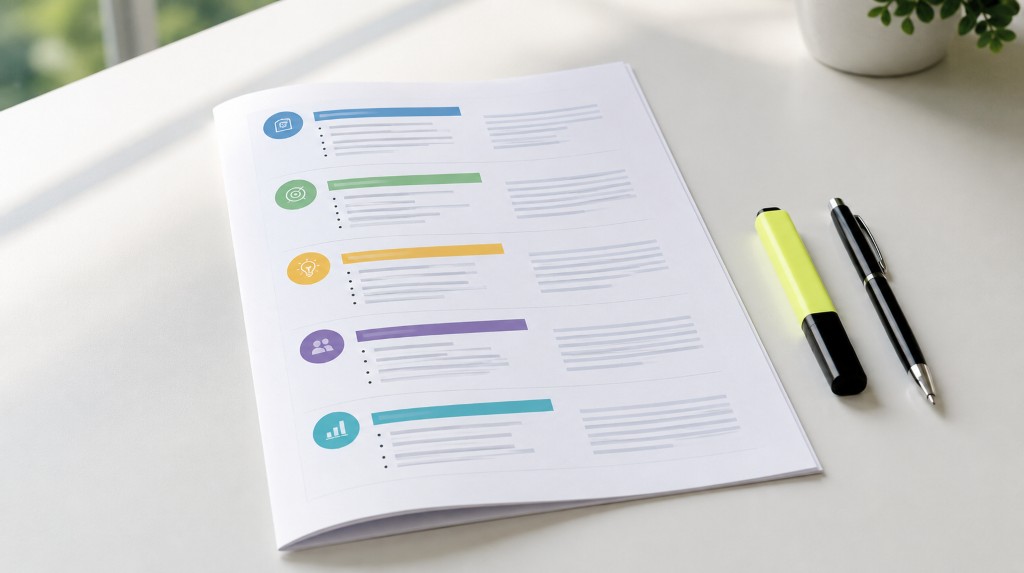
A sales playbook for a founder-led small to medium business needs five sections:
- Who you sell to – your ideal buyer, what problems they have, what disqualifies them
- How the process works – the stages, what must be true at each stage, what moves a deal forward
- What each conversation looks like – the structure of a discovery call, a proposal meeting, a follow-up conversation
- How to handle common situations – price questions, slow buyers, deals that go quiet, buyers who want more time
- What good looks like – your standards for activity, follow-up, deal tracking, and conversation quality
Each section should be specific enough that your rep can open it before a call and know exactly what they are trying to accomplish.
Section by Section – How to Build Each Part
Section 1 – Who You Sell To
Start with your ideal buyer. Not a generic description – a specific one.
Write down:
- The type of business – size, industry, situation
- The problem they have that your offer solves
- What their situation looks like before they find you
- What signals tell you a buyer is genuinely qualified – and what signals tell you they are not
Add a short list of disqualifiers. These are the situations where you have learned through experience that the engagement will not work – wrong size, wrong problem, wrong urgency, wrong decision maker. Your rep needs to know these as clearly as they know who to pursue.
Section 2 – How the Process Works
Write out your deal stages and what must be true at each stage before a deal moves forward. This does not need to be elaborate – three to five stages with one to three entry criteria each is enough.
For example:
- Discovery complete – buyer has confirmed the problem, named who else is involved, and stated a budget range
- Proposal sent – buyer has agreed to a follow-up call before the proposal goes out
- Decision stage – buyer has reviewed the proposal with the relevant people and shared their concerns
Keep it buyer-focused. Each stage reflects what the buyer has done – not what your rep has done.
Section 3 – What Each Conversation Looks Like
This is the most used section of any playbook. Write a simple structure for each type of conversation your rep will have:
Discovery call structure:
- Opening – confirm the agenda and time available
- Problem – what is happening, how long it has been happening, what it is costing them
- Priority – why now, what changes if they do not fix it
- Decision – who else is involved, how they typically make decisions like this
- Next step – agree on a specific next action before the call ends
Proposal meeting structure:
- Recap what they told you in discovery – show you were listening
- Present the approach – what you will do and why it fits their situation
- Address what they said would be a concern
- Ask what questions they have before you discuss investment
- Agree on next step before the meeting ends
Follow-up after proposal:
- Send within 24 hours of the meeting
- Recap what was discussed, what was agreed, and what the next step is
- Keep it short – one paragraph, no more than three bullet points
- Schedule the follow-up call before the email goes out
Write these structures in plain language. Your rep is not performing – they are having a conversation with a real buyer. The structure is what gives them confidence, not a script.
Section 4 – How to Handle Common Situations
Your rep will face situations they do not know how to handle. The playbook should cover the five or six most common ones before they happen.
Price comes up before value is established:
Do not discount. Do not defend. Ask: “Before we talk about investment, I want to make sure we have covered what this problem is actually costing you. Can we go back to that for a moment?”
Buyer says they need to think about it:
This is almost always a signal that something is unresolved – a concern they have not voiced, a person who has not been involved, or a risk they have not articulated. Ask: “Of course. What specifically would help you feel more confident moving forward?”
Buyer goes quiet after the proposal:
Do not chase with “just checking in” emails. Instead: “I want to make sure you have what you need to make a decision. What questions came up when you reviewed the proposal internally?”
Buyer says a competitor is cheaper:
Do not match the price. Ask: “What do you know about how they work? I want to make sure you are comparing the right things.” Then walk through what makes your approach different – not better in general, but specifically better for their situation.
Deal has been in the same stage for more than three weeks:
Name it directly: “I noticed we have not moved forward in a few weeks. I want to be honest with you – is this still a priority, or has something changed?” A clear no is better than a slow drift to nothing.
Section 5 – What Good Looks Like
Write down your standards – the specific behaviors that tell you a rep is doing the job well. These become the basis of your coaching and your accountability conversations.
For example:
- Every first meeting has a recap email sent within 24 hours
- Every proposal goes out with a follow-up call already scheduled
- Every active deal has a documented next step agreed by the buyer
- No deal sits in the same stage for more than two weeks without a direct conversation about why
These are not aspirational goals. They are the operational minimum. Your rep should know them on day one.
How to Know If the Playbook Is Working
A playbook that is not being used is not working – no matter how well written it is. Here is how to tell the difference.
Your rep asks fewer questions over time
In the first month, your rep will ask a lot of questions. That is normal. By month three, if they are still asking the same questions they asked in month one, the playbook is not answering them – either because it is not specific enough or because your rep is not using it.
Deals move consistently
If your rep’s deals are moving through the process at a similar pace to yours – similar deal length, similar close rate, similar conversion at each stage – the playbook is doing its job.
If deals are stalling at the same point repeatedly, that stage of the process needs more clarity in the playbook.
Your rep handles situations independently
When a buyer goes quiet, your rep follows the playbook guidance without calling you. When price comes up, they use the language in the playbook without asking how you would handle it.
If your rep is still defaulting to you for common situations, the playbook does not cover them clearly enough.
You can review the playbook and see what actually happened
When you look at a deal in your tracking tool, you should be able to see whether your rep followed the playbook – whether the right conversations happened, whether the deal moved for the right reasons, whether the next steps were agreed and followed through.
If the tracking tool does not tell you this story, the playbook is missing something.
Founder Scenario 1 – No Playbook
A founder hires a rep in February. The onboarding is three days of shadowing calls and a product overview. By April, the rep is running conversations independently – but their discovery calls run long and unfocused, they send proposals without confirming a follow-up call, and they handle price questions by immediately offering a discount.
The founder steps in deal by deal to correct the issues. The rep improves slightly, then regresses. By June, the founder is still in most of the deals that matter.
The problem is not the rep. The problem is that the rep never had a document that told them what good looks like. They were copying what they remembered from the onboarding – which was the founder selling, not the founder explaining how to sell.
Founder Scenario 2 – Playbook in Place
Same founder. Different approach. Before the rep’s first day, the founder spends two days writing the playbook – who they sell to, how the process works, what each conversation looks like, how to handle the five most common situations, and what the standards are.
On day one, the rep reads the playbook. In week one, they shadow two calls with the founder walking through the playbook structure in real time. In week two, they run two calls themselves – with the founder observing and debriefing against the playbook afterward.
By month two, the rep is running discovery independently. By month three, they are building proposals without the founder’s involvement. By month four, they close their first deal from start to finish.
The playbook did not make the rep perfect. It gave them a clear enough picture of what good looks like that they could practice toward it – and the founder could coach against it.

How to Keep the Playbook Current
A playbook that was written eighteen months ago and never updated is worse than no playbook – because it gives your rep false confidence in a process that no longer reflects reality.
Update the playbook when:
- Your ideal buyer changes – new industries, new business sizes, new problems you solve
- A conversation structure stops working – buyers respond differently, a section produces confusion, a question no longer lands the way it used to
- A new situation keeps coming up that the playbook does not cover
- Your rep finds a better way to handle something than what the playbook says – and you agree
The best signal that the playbook needs updating is your rep asking the same question multiple times. If they keep asking how to handle something, that thing belongs in the playbook.
Conclusion
The playbook is not a document you write for your rep. It is a document you write for your business – so that what you know about how to sell does not disappear the moment you stop being in every conversation.
It does not need to be long. It does not need to cover every scenario. It needs to answer the most important question your rep has on the day they run their first call alone: what am I supposed to do here?
Build it before you need it. The founders who build the playbook before they step back are the ones who actually get to step back.
If you want help building a playbook that fits your process, Owen’s consulting work starts here.
Frequently Asked Questions
How Long Should a Sales Playbook Be?
Long enough to answer the questions your rep will actually ask – short enough that they will actually use it. For most founder-led small to medium businesses, that is ten to twenty pages. If it is longer than that, it is probably covering scenarios that do not need covering yet. Start lean. Add to it as real situations arise.
Should I Write the Playbook Before or After I Hire My Rep?
Before. The playbook is what makes onboarding specific instead of generic. If you write it after, you will spend the first three months correcting problems that the playbook would have prevented. Writing it before also forces you to articulate what you actually do – which often reveals gaps in your own process that you can fix before your rep encounters them.
What If My Process Is Still Evolving?
Document what you do right now – not what you plan to do. A playbook based on your current process is infinitely more useful than a blank document waiting for the perfect process. Update it as the process improves. That is exactly how a living document is supposed to work.
How Do I Get My Rep to Actually Use It?
Reference it constantly in the first ninety days. When your rep asks how to handle something, point them to the playbook before you answer. When you debrief a call, open the playbook and discuss what happened against what it says. When something goes well, connect it to the playbook standard. The playbook becomes real when you use it as the basis for coaching – not when you hand it over and hope for the best.
What Is the Difference Between a Sales Playbook and a Sales Blueprint?
The blueprint is the strategic layer – your ideal buyer, your revenue plan, your process design. The playbook is the operational layer – the specific conversations, structures, and standards your rep follows every day. The blueprint defines what the system is. The playbook is how the rep runs it.
When Should I Update the Playbook?
When your rep keeps asking the same question, something is missing. When a stage of the process keeps producing unexpected results, something needs clarifying. When your ideal buyer shifts or your offer changes, the whole playbook needs a review. In practice, a light review every quarter and a full review every six months keeps it current without making it a burden.