
You built the business by selling it. You know the pitch better than anyone. You know the buyers, the objections, the moments where deals turn. You are still – genuinely – the best person in the room when a conversation gets complicated.
And you know, intellectually, that this cannot continue. You have said it yourself. You cannot scale if every deal runs through you. You hired someone to change this. You told yourself things would be different.
But when a big deal comes in, you are on the call. When something gets complicated, you step in. When the stakes feel high enough, you find a reason why this one is different – why this particular deal needs you specifically.
This is not a strategy. It is a pattern. And understanding why it happens is the first step to breaking it.
Why Founders Who Built Through Selling Cannot Let Go
Selling Is Where You Have Always Been Most Competent
For most founders, selling is the skill that made everything else possible. Before the business had a process, before it had staff, before it had systems – it had you closing deals. Selling is not just something you do. It is where your competence is most legible to you.
When you are in a sales conversation, you know exactly what good looks like. You know when you are winning and when you are losing. You know how to adjust in real time. That clarity is rare – and deeply satisfying.
Outside of the sales conversation, the feedback loops are slower. A leadership decision you make today may not show its quality for months. A process change may improve results gradually in ways that are hard to attribute. But a sales call either ends with a yes or it does not. The feedback is immediate. The result is yours.
Stepping back from that clarity is harder than most founders expect. Not because they cannot trust the person selling – but because the person selling cannot give them the same immediate signal that they are doing something well.
Closing Deals Is How You Have Always Proved Your Value
For many founders, the identity of “the person who closes deals” was formed early and has never been examined. You were the one who could sell when no one else could. You were the one who brought revenue in. That is a role with meaning attached to it – and meaning is hard to relinquish.
When a deal closes through someone else’s effort, it is logically a success. But it does not feel the same. There is a version of success that requires your direct participation – and anything short of that feels incomplete, even when the result is identical.
This is not vanity. It is the psychological residue of a period when your personal involvement genuinely was the difference between the business surviving and not. That period has passed – but the identity has not updated to reflect it.
You Do Not Fully Believe Anyone Else Can Do It
This is the most honest version of the pattern – and the hardest to admit.
It is not that you think the person selling is incompetent. It is that you believe the deal is too important to risk. You believe the buyer needs to experience you specifically. You believe that without you in the room, the deal will be handled in a way that costs you something – the relationship, the positioning, the price, the outcome.
And you might even be right. In some deals, your involvement does add something that the other person cannot. But that calculation is not honest unless you are also counting what it costs you to be in every deal – the strategy work that does not get done, the leadership capacity that gets consumed by transaction, the signal you send that the business runs through you and only you.
You Get Energy From Winning Deals That You Cannot Get Elsewhere
Closing a deal produces something – a rush of certainty, of being useful, of mattering in a direct and measurable way. That feeling is real and it is not trivial. Some founders are energised by the win in a way that nothing else in the business replicates.
The problem is not that the feeling exists. The problem is when the feeling becomes the reason – when you stay in deals not because the deal needs you but because you need the deal. When stepping back stops being a capacity question and becomes a deprivation question.
If you are honest with yourself: are you in the deals because the deals require it? Or are you in the deals because you have not found another place in the business that gives you what selling gives you?
What the Pattern Costs
It Caps the Business at Your Personal Capacity
Every deal that runs through you is a deal that cannot run without you. The business is not generating revenue – you are. And you have a finite number of hours, a finite amount of energy, and a finite number of conversations you can have before something breaks.
As long as every important deal requires your direct involvement, revenue is capped at what you can personally close. Not at what the market will support. Not at what the business model allows. At what you can do in the hours you have.
It Prevents Honest Assessment of Your Own Process
If you are closing every deal yourself, you cannot see your process objectively. You are too inside it. You know what worked, but you cannot explain it in a way that transfers because so much of it is instinct, timing, and context that lives only in you.
A process that cannot be observed and diagnosed is a process that cannot be improved. You end up relying on feel – and when results change, you have no structured way to understand why.
It Signals to the Market That You Are the Product
When buyers learn – and they do learn – that the best way to get the best outcome is to deal directly with you, they will seek that out. They will ask for you by name. They will expect you on calls. They will negotiate for your personal involvement as a condition of the deal.
You have trained the market to believe that the business and the founder are the same thing. And that belief, once established, is very hard to undo – especially if you have built it across years of being present in every important conversation.
It Makes the Business Hard to Value and Hard to Exit
A business where the founder closes every deal is not a business with a sales system. It is a business with a talented individual. Those are worth very different amounts – to a buyer, to a partner, to anyone evaluating whether the revenue will hold when you are no longer doing every conversation yourself.
This matters even if selling the business is not on your immediate agenda. Because the same fragility that reduces its value also makes it less resilient. One difficult season, one health event, one major distraction – and the revenue system, which was never really a system, reveals itself.
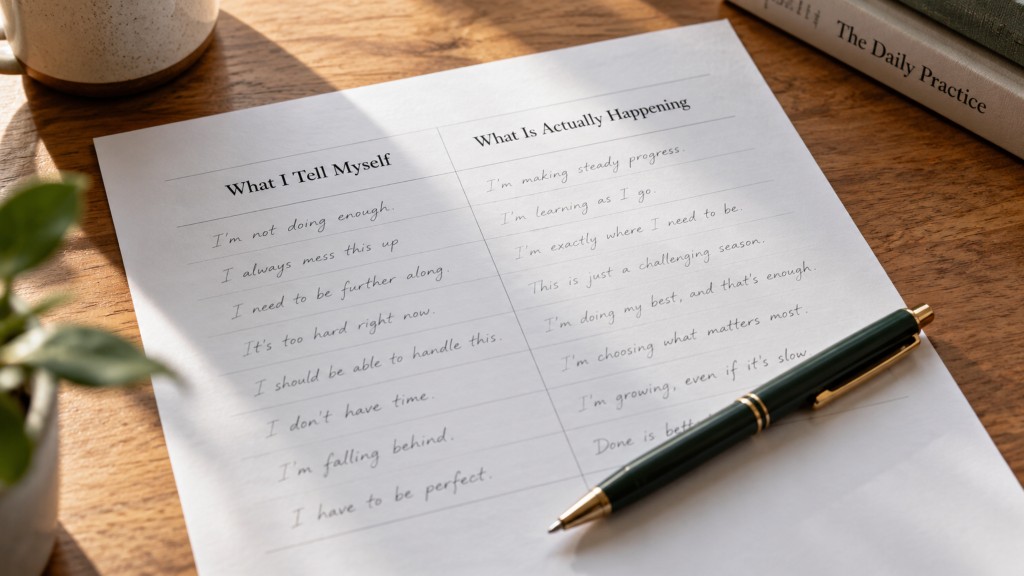
The Simple Pattern Table
| What the Founder Tells Themselves | What Is Actually Happening |
| “This deal is too important to risk” | You do not trust the process you built – or you have not built one |
| “The buyer needs to deal with me specifically” | You have trained them to expect you – and have not transferred the relationship |
| “I will step back after this one” | This one is always followed by another one |
| “Nobody else understands this buyer the way I do” | You have not documented what you understand so anyone else can use it |
| “I just want to make sure this one closes” | You need the win more than the deal needs you |
Founder Scenario 1 – The Founder Who Is Still Closing Everything
Three years in. Revenue is solid. A person is in place to handle conversations. And yet every deal above a certain size ends up with the founder on the call – not because they planned it that way, but because the founder got nervous, checked in, and then stayed.
The other person in the conversation learns quickly. When things get complicated, they ask the founder to join. When a buyer asks for the founder by name, the request is honoured. When something looks like it might not close, the founder steps in to save it.
Six months pass. The other person in the role is not developing. How could they? Every time a conversation gets difficult – which is exactly when development happens – the founder absorbs the difficulty. The easy conversations build no capability. The hard conversations never reach the person who needs to have them.
The founder is still closing everything. And they are exhausted by it in a way they cannot explain, because they are the one who keeps choosing to be in the room.
Founder Scenario 2 – Recognising the Pattern and Changing It
Same founder. Same business. But this time, after a specific deal where they stepped in unnecessarily and then noticed it, they ask an honest question: why did I just do that?
Not the surface answer – “the deal needed me.” The real answer.
They sit with it. And what they find is that the deal did not need them. They needed the deal. The win. The certainty that comes from being in the room when a yes is given.
That recognition does not immediately change the behaviour. But it changes what they are working on. Instead of asking “is this deal important enough to require me?” they start asking “what am I getting from being in this deal that I am not getting elsewhere in the business?”
They start building the review and coaching process that gives them a different kind of feedback signal. They start finding the strategic work that produces the same engagement that closing used to produce. They start letting conversations run without them – and debriefing afterward instead of joining.
The transition is not immediate. But it is directional. And that direction, maintained consistently, is what eventually produces a business that sells without them in every room.

What It Actually Takes to Change the Pattern
Name the real reason you stay in deals
Not the business justification – the psychological one. Is it competence? Identity? Energy? Fear? Until you name it accurately, you will keep finding business justifications for what is actually a personal preference.
The justification will always be available. There is always a reason a deal is important enough to warrant your presence. The question is whether you are choosing based on what the deal needs or what you need.
Build a different source of the signal you get from closing
The feeling that comes from closing a deal – the certainty, the direct feedback, the sense of contributing something measurable – does not disappear when you stop closing deals. It goes unmet. And unmet needs have a way of pulling you back toward what used to meet them.
Find what else in the business produces that signal for you. Strategic decisions with clear outcomes. Revenue reviews where the patterns are visible. Building something new that has a definable result. The goal is not to eliminate the need – it is to meet it somewhere that does not require your presence in every transaction.
Accept that some deals will close differently than you would have closed them
Not worse. Differently. The way you close a deal is not the only right way. And if a deal closes at 90% of what you would have achieved – but the person who closed it is developing real capability, and you had four hours back that you put toward something the business needed from you – the maths are not close.
The standard you are holding yourself to when you stay in deals is not “did this close?” It is “did this close the way I would have closed it?” That is a standard that guarantees you will always find a reason to stay.
Make stepping back a decision – not a default
The current pattern is a default. You step in because that is what happens. Changing it requires making a deliberate decision in the opposite direction – and then holding it even when the instinct says to override it.
That means deciding in advance which deals you will be in and which you will not. Setting a clear standard for what warrants your presence – and holding it even when a specific deal feels important enough to justify an exception.
The exception is always available. The decision has to be stronger than the exception.
Conclusion
The founder who cannot stop closing every deal is not lacking discipline. They are using closing as a substitute for something the rest of the business is not yet giving them.
Understanding that is not a criticism. It is a diagnosis. And a diagnosis is useful because it points toward the actual fix – which is not forcing yourself to step back through willpower, but building the conditions that make stepping back genuinely possible.
What does the business need from you that only you can give – that is not closing deals? Build your role around that answer. The deals will still close. Just not always with you in the room.
If you want help working through what that transition looks like for your business, Owen’s consulting work starts here.
Frequently Asked Questions
How Do I Know If I Am Staying in Deals for the Right Reasons or the Wrong Ones?
Ask yourself honestly: if the deal closed exactly as it would have if you had stayed – same outcome, same relationship, same price – but you were not in the room, would that feel like a success? If the answer is not a clear yes, you are staying for yourself, not for the deal. The right reason to be in a deal is that your presence produces a materially different outcome that could not be achieved any other way. That is a much higher bar than “this deal is important.”
Is It Ever Appropriate for a Founder to Stay Involved in Closing Deals?
Yes – in specific and defined circumstances. A deal that is genuinely strategic, that requires relationships that only the founder holds, or that is complex enough to require a level of judgment that has not yet been developed. But these should be exceptions with clear criteria – not a default position that applies whenever the deal feels significant. If you cannot describe in advance which deals warrant your presence without needing to evaluate each one in the moment, you do not have criteria. You have a rationalisation machine.
What If My Business Model Requires My Involvement in Every Deal?
Then the business model itself needs examination. Some businesses are built around the founder’s personal involvement – and that is a valid model, but it has a ceiling. If personal involvement is genuinely required by the nature of what you sell, the question is whether you have built the business intentionally around that constraint – with pricing and capacity that reflect it – or whether you drifted into it and are now limited by a ceiling you never consciously chose.
What If I Try Stepping Back and the Results Drop?
A short-term drop is likely and expected. The question is whether the drop is temporary – a transition cost that reverses as capability develops – or permanent, which suggests either the transition happened too quickly or the underlying capability was not there yet. Measure the right things during the transition: not just whether deals closed, but whether the quality of conversations is improving, whether the process is being followed, whether patterns are developing that will produce better results over time. A drop in closed deals accompanied by improving process signals is a transition. A drop in closed deals accompanied by no process improvement is a different problem.
How Long Does It Take to Break This Pattern?
There is no standard answer – but the pattern usually took years to build and will take months to change. The founders who change it fastest are the ones who address the psychological root directly, not just the behavioural surface. Telling yourself to stay out of deals while the need that drives you into them remains unmet is not a strategy. It is suppression. The pattern returns under pressure. Address the root and the change becomes directional rather than effortful.
What If the People Around Me Expect Me to Be in Every Deal?
Then part of the work is resetting those expectations – with buyers, with the people who support the sales process, and with yourself. Expectations shift when behaviour shifts consistently over time. If you are sometimes in deals and sometimes not, people will calibrate to expect you when something feels important – which is always. If you are consistently not in deals except in defined circumstances, that becomes the new normal. The reset takes time and it requires holding the line even when someone asks for you specifically.