In today’s market, it’s crucial to have a coaching culture in sales. Organizations benefit from building a coaching culture by fostering continuous learning, leadership development, and a supportive environment that drives growth. This approach helps teams grow and succeed together. Leaders play a key role by offering continuous support and guidance, which boosts team ability and spirit.
By starting a coaching culture in sales, companies mix support with freedom. Making coaching a core, habitual practice helps create high performing sales teams and ensures alignment with organizational goals. This helps grow sales talent and encourages a culture of top performance. A coaching culture delivers results and drives business outcomes by aligning coaching strategies with measurable objectives. Coaching well leads to better sales, more engaged workers, and long-term success for the company. It makes your sales team dynamic and fully ready to reach their top potential.
Key Takeaways
- A coaching culture enhances individual and team performance.
- Empowering sales teams through coaching leads to higher engagement.
- Creating a coaching culture fosters a self-driven workforce.
- Effective coaching practices can significantly improve sales outcomes.
- Skilled leadership is crucial for nurturing talent and achieving sustained success.
Understanding the Importance of a Coaching Culture in Sales
For sales teams wanting to stay ahead, creating a coaching culture is crucial. Making this shift requires a mindset shift, where organizations move from traditional management approaches to fostering curiosity, asking questions, and adopting a coaching mentality. It goes beyond a simple trend. It’s a key strategy for growing sales professionals and encouraging ongoing learning.
Sales managers and managers play a vital role in developing talent and addressing performance gaps within their teams. By focusing on leadership development and coaching, they help build a strong foundation for continuous improvement and long-term success.
What is a Coaching Culture?
A coaching culture means a company focuses on improving employee skills with regular feedback and support. A good coach leverages soft skills such as empathy and communication to facilitate effective coaching conversations that drive skill development and behavior change. It helps with both personal and skill development growth. By making this a daily practice, businesses keep their teams driven and ready to tackle new challenges.
Benefits of Coaching for Sales Teams
Sales team coaching brings many powerful benefits.
Teams working in such environments often show:
- Better communication skills
- More ability to adapt to market shifts
- Chances to grow through mentorship
- Increased motivation from constant feedback and guidance
- Improved individual performance and higher win rates
Coaching also helps sales teams consistently meet their sales quotas and quickly address performance issues, leading to stronger overall results.
Impact on Overall Sales Performance
Building a strong coaching culture boosts sales by promoting long term growth :
- Upgrading productivity as team members align with objectives
- Keeping employees longer as they feel more appreciated
- Raising revenues thanks to a more efficient team
- Shortening sales cycles by helping sales reps identify bottlenecks and improve their approach, leading to faster conversions and increased revenue
A successful sales team coaching program relies on consistent coaching practice and support from every level of the organization.

Adopting a data driven approach is essential for measuring and continuously improving the effectiveness of coaching initiatives.
Key Elements of an Effective Coaching Culture
Building a successful sales team needs a strong coaching culture at its core. Targeted training programs and a central hub for resources are essential for supporting and sustaining this coaching culture. Leadership commitment, continuous feedback, and teamwork are key. Together, they ensure your sales team excels.
Leadership Commitment
It all starts with the leaders. Leaders are coached and trained to become better leaders, fostering a coaching culture that emphasizes ongoing development and growth. They need to fully embrace a coaching culture. By leading and participating in coaching, they influence everyone. This commitment is the foundation of the coaching culture.
Continuous Feedback Mechanisms
Continuous feedback is crucial. It fosters a mindset focused on growth. By focusing feedback on key development areas and tracking metrics to measure progress, coaching becomes more targeted and effective. It highlights what needs improvement and speeds up development. Having a structured feedback system and performance metrics makes coaching an everyday activity.
Collaborative Environment
A team that works together grows stronger. Front line managers play a key role in fostering collaboration by guiding their teams with a proven framework that supports effective teamwork. Encouraging sharing and mutual support boosts team unity. This teamwork approach enhances team development in the coaching style, showing how collaboration leads to success.
How to Assess Your Current Sales Coaching Practices
It’s key to check your current sales coaching ways to bring in a coaching culture right. Organizations regularly assess and develop their coaching culture to ensure it is well developed, fostering continuous growth and improvement. These look-over spots where sales coaching turns can boost your team’s work and stick with the best methods. Here are steps to help you in this journey.

Evaluating Your Team’s Coaching Needs
Begin by figuring out what coaching your team really needs. This means looking into what every team member needs to do their best. Do this through one-on-one talks, surveys, or watching them work. Getting direct feedback from your team is crucial to match your coaching to their own development needs, and you should also consider each team member’s career path when evaluating coaching needs.
Identifying Skill Gaps
Finding where skills are lacking is key. Use data on performance to see where the team could be doing better. Knowing which skills need work helps you coach more directly. It’s good to work on both strong skills, like product know-how, and skills of top performers, such as talking well and negotiating.
Tools for Assessment
Using special tools can help a lot in checking your coaching methods. Tools like Salesforce, HubSpot, and Gong give strong feedback and data to see how things are going and what to improve. They also make it easy to keep an eye on progress and tweak your coaching as needed.
| Tool | Features | Benefits |
| Salesforce | Performance analytics, customizable dashboards | Helps in tracking sales performance and spotting coaching chances |
| HubSpot | Automated feedback, reporting tools | Makes continuous feedback and watching performance easy |
| Gong | Conversation analytics, deal intelligence | Gives insight into how to talk better and what to fix |
By carefully looking at your coaching ways with these steps and tools, you set a good base for a coaching culture. This planned move makes sure your team gets coaching that matters, following the best methods in sales coaching.
Developing a Coaching Framework
Creating a solid coaching framework is key for any sales team’s victory. It involves having clear goals, well-defined roles, and a regular coaching timetable. This makes sure your team gets the guidance and support it needs.
This approach brings accountability and clarity. It aligns coaching tasks with your business aims.
Setting Clear Objectives
Every great coaching framework begins with clear goals. Knowing what you aim to accomplish helps shape focused and measurable results. It makes coaching more direct and gives both coaches and sales folks a definite direction.
Defining Roles and Responsibilities
It’s vital to outline everyone’s duties in a sales coaching framework. Clear roles cut down confusion and boost coaching efficiency. Each person, from leaders to sales reps, must know their role and its impact on the team’s goals.
Creating a Coaching Schedule
Regular coaching is essential. A steady schedule ensures ongoing progress checks and support for sales reps. It keeps the coaching energy going and allows for quick changes when needed.
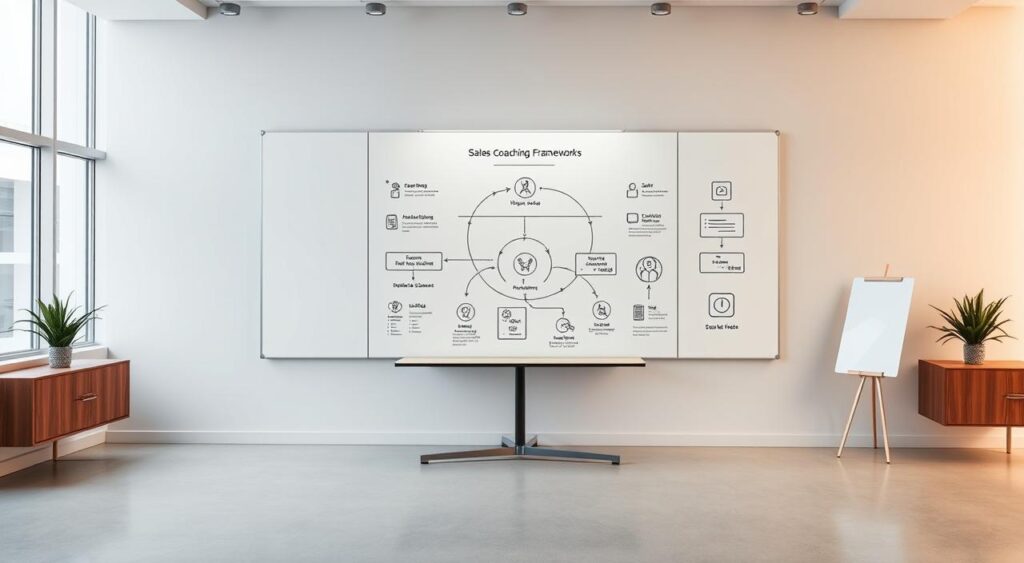
To better explain the roles in a coaching setup, here’s a simple guide:
| Role | Responsibilities |
| Sales Leader | Setting objectives, providing feedback, tracking progress |
| Sales Coach | One-on-one coaching sessions, skills training, motivation |
| Sales Representative | Engaging in training, implementing strategies, achieving targets |
Training Leaders to Become Effective Coaches
To turn leaders into effective coaches, they need a strong grasp of sales coaching and leadership styles. Sales training plays a crucial role in preparing leaders to become effective coaches by providing structured, ongoing development that aligns with coaching frameworks and organizational goals. They have to be able to create an environment where the team feels supported and motivated. This helps team members to perform better on their own.
Essential Coaching Skills for Sales Leaders
For leaders aiming to be great at coaching, certain skills are key. Being able to listen well, connect on a personal level, and ask the right questions is vital. These skills help leaders understand their team better and bring out the best in each person.
Techniques for Providing Constructive Feedback
It’s crucial to give feedback that helps and doesn’t hurt. Leaders should use techniques that are clear and lead to action. Feedback should help team members grow and get better. Using the ‘sandwich method’, where you start and end with something positive, can really work.
Encouraging a Growth Mindset Among Leaders
It’s important for leaders to believe they can always improve and innovate.
Encouraging this mindset involves ongoing training and opportunities for development. It’s about showing that with effort and dedication, skills can always be improved. This belief drives a successful coaching culture.
Empowering Salespeople Through Coaching
Building a strong coaching culture in sales is vital. Coaching not only helps develop talent within the sales team but also plays a crucial role in increasing revenue for the organization. It helps create sales teams that are motivated and operate on their own. Good coaching boosts skills and fosters a space where people are always learning and accountable. Coaching that meets each salesperson’s unique needs helps them control their sales success and how well they perform.
Customizing Coaching for Individual Needs
Sales coaching can’t be the same for everyone. Tailoring coaching to fit each person ensures they get the right support to do well. This approach helps fix specific weaknesses while using each person’s strengths. It not only improves performance but also makes the job more satisfying. This makes the team work better together and be more effective.
Fostering Accountability and Ownership
To empower a sales team, you must build a sense of accountability and ownership. Encourage them to evaluate themselves and give regular feedback. This approach makes everyone aware of their roles and the outcome of their work. A culture like this means each salesperson actively contributes to their success and the company’s objectives.
Motivating Self-Driven Learning
A strong coaching culture in sales encourages team members to learn on their own. Inspiring them to look for learning chances and self-improve makes the team adaptable and forward-thinking. It’s key to give resources, celebrate their wins, and promote a mindset that loves growth. These steps are crucial in encouraging ongoing learning and betterment. Building such a coaching culture is also essential for developing high performing teams that are resilient, efficient, and consistently achieve top results.
Measuring the Success of Your Coaching Culture
Measuring your sales coaching’s success is necessary. You need to track key metrics, get feedback, and improve continually. This helps make a coaching culture that boosts long-term sales growth.
Key Performance Indicators (KPIs) to Track
Picking the right KPIs is crucial.
You should focus on:
- Sales growth rates
- Employee retention rates
- Customer satisfaction scores
- Time-to-productivity for new hires
- Number of coaching sessions conducted
Tracking these KPIs offers insights into the effectiveness of your coaching. It shows the direct impact on sales.
Gathering Feedback from Team Members
Gathering regular feedback from your team is foundational.
You can use these methods:
- Anonymous surveys to measure satisfaction levels
- One-on-one interviews for deeper insights
- Focus groups for shared discussions
This feedback helps find areas to improve and strengths in your coaching approach.
Continuous Improvement Strategies
Using data and feedback to improve is vital.
Good strategies include:
- Regularly updating coaching methods with new best practices
- Promoting an open culture for feedback
- Investing in training for coaches to boost their skills
By refining your methods, your coaching culture gets stronger and adapts to changes in sales, benefiting your team constantly.
Check out this table for how different indicators affect sales performance:
| Key Indicator | Impact on Sales Performance |
| Sales Growth Rates | Direct measure of financial success |
| Employee Retention Rates | High retention shows a positive environment and effective coaching |
| Customer Satisfaction Scores | Measures quality of sales service and customer relationships |
| Time-to-Productivity for New Hires | Shows how fast new hires become productive |
| Number of Coaching Sessions Conducted | Marks the dedication to improving sales skills |
Sustaining a Long-Term Coaching Culture
Building a lasting coaching culture means always being ready to learn, celebrate wins, and adapt to new market trends. A well developed coaching culture makes a huge difference in long-term success and ensures that coaching efforts do not fall flat. Coaching and developing your sales team is key for continuous success and growth.
Creating a Cycle of Continuous Learning
To create a strong environment, make ongoing learning a major focus for your leaders. Keep your team in the lead by holding regular training sessions. This keeps them sharp on industry trends. Encourage a place where everyone can share and learn from each other. This promotes a culture of constant improvement and sharing knowledge.
Celebrating Coaching Successes
It’s vital to celebrate coaching achievements to keep your team motivated. Pointing out the successes of individuals and the group boosts morale. It also shows the real value of good coaching. Use team meetings to share these success stories. It highlights how effective coaching can lead to great results in sales, especially by improving closing deals.
Adapting to Evolving Market Conditions
Being able to adjust to changing markets is crucial for keeping your coaching culture alive. Change your coaching plans often to match new trends and revenue growth ideas. Use up-to-date data analysis for insights. This lets you adapt fast and well to market changes. This way, your coaching culture stays strong and forward-thinking.
FAQ
What is a Coaching Culture?
A coaching culture is when an organization focuses on growing its employees. It does this through regular feedback and guidance. It’s all about ongoing learning and reaching personal and professional goals within the team.
What are the benefits of coaching for sales teams?
Sales teams get a lot from coaching. They communicate better, adapt faster, and find mentors. The biggest gains are more engagement and stronger sales.
How does a coaching culture impact overall sales performance?
It boosts sales by making teams more productive, keeping people longer, and growing revenue. Salespeople become more driven to hit higher targets.
What role does leadership commitment play in an effective coaching culture?
Leaders are key because they must support and join in the coaching. It shows learning and improving are top priorities for everyone.
Why are continuous feedback mechanisms important in a coaching culture?
They’re key because they give ongoing, useful feedback. This helps employees keep getting better and stay in line with the company’s goals.
How does a collaborative environment contribute to a coaching culture?
Teamwork, learning from peers, and supporting each other are critical. These elements help sales teams keep growing and achieving.
How can you evaluate your team’s coaching needs?
To understand your team’s needs, know their specific challenges. Use tools like surveys and performance data to find out more.
What are effective tools for assessing sales coaching practices?
Great tools include CRM systems, tracking software, surveys, and assessments. They point out where coaching needs to get better.
How do you set clear objectives in developing a coaching framework?
You define clear goals that are SMART and match your company’s strategies. This helps in making a solid coaching plan.